Introducing Limitless Learning
- Mar 17, 2024
- 2 min read

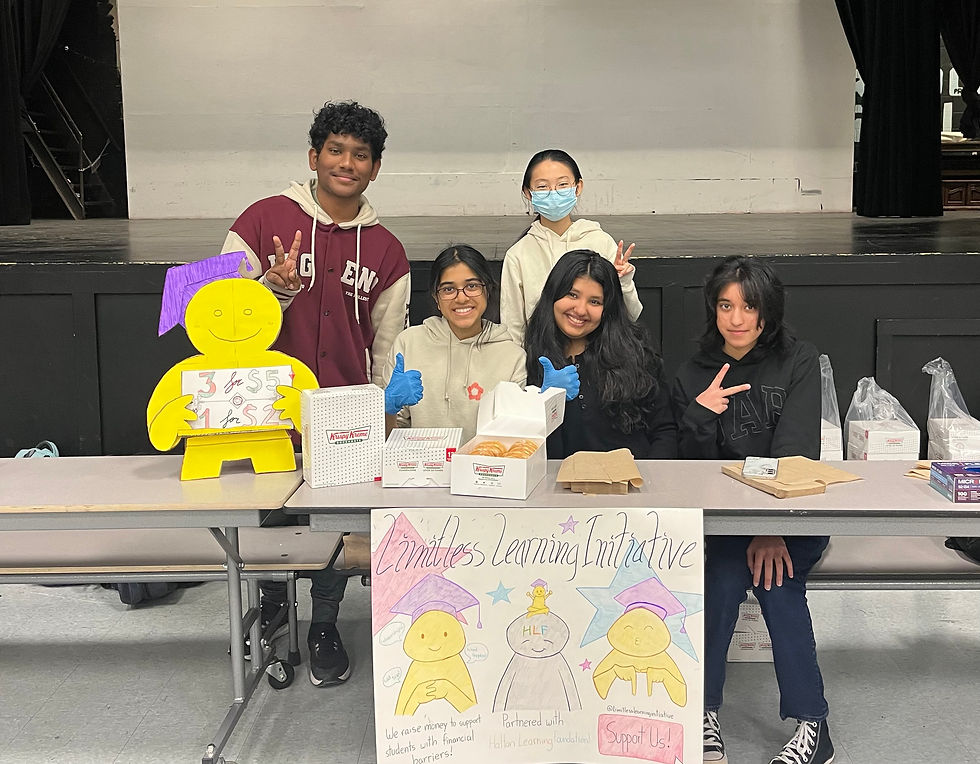
The Limitless Learning Initiative is a student-led organization that works towards equal education for students in Halton. We believe that every student should have an equal opportunity to flourish when it comes to education, regardless of financial status. This is why the Limitless Learning Foundation gathers funds to directly donate to the Halton Learning Foundation, an organization that provides money for groceries, clothing, school supplies and extracurricular activities to families. It also gives out school grants and scholarships for those pursuing a higher education.
More than 1 in 10 students live at or near the poverty line in Halton. Out of the approximate students spread throughout Halton, this means at least 6,700 suffer from financial constraints. Financial barriers lead to negative consequences for students by limiting their opportunities and hindering their academic success. An inability to afford essential school supplies, such as textbooks and technology, along with basic necessities like housing, food, and transportation prevent students from thriving in their academic career due to lower grades and stress. Many of these factors, if not properly handled, lead to hunger, fatigue, and difficulty concentrating in class.
Over the last few years, the cost of the universities and colleges’ tuition costs has increased conspicuously, making post-secondary education less accessible to many. This causes students to take on hefty student loans, which take years to pay off. Furthermore, the course materials that students are required to purchase often come with exorbitant price tags. The lack of affordable alternatives can place an additional strain on students’ financial struggles. After students get accepted to the universities, the overall cost of living, including housing, food and transportation, is extremely expensive. Top universities including the University of Toronto and McGill University, not to mention medical-related fields of study, are especially costly as well.
There are various practical solutions for students with different levels of financial struggles: financial aid programs, scholarship opportunities, and cost-saving strategies. One of the most significant financial aid programs is need-based aid. It is used for students from low-income families, helping cover tuition fees and living expenses. Moreover, when universities and colleges send out offers to students, they also send out various scholarship opportunities to students based on various criteria. Additionally, students can apply for scholarships from organizations and foundations that are related to their field of study or personal attributes. There are a variety of cost-saving strategies, such as sharing a house with roommates, so expenses can be split. In turn, budgeting skills and financial decisions are learned through experience.
The school years leading up to graduation not only shape our future, but in many cases also determine if we have one that can support us. It is extremely important to not only address the effect financial challenges have on students, but work to lessen the impact it has as well. No student should have to struggle throughout school because of things they have little control over. The education system and what comes with it should be accessible for all: field trips, textbooks, tutors, writing materials, tuitions, and everything else.


Comments